Rätsch Research Group
Research Overview
Members (Alumni)
Publications
Talks & Lectures
Meetings
Career Opportunities
Machine Learning Club
Contact
Software
Web Resources
Biomedical Data Science Research
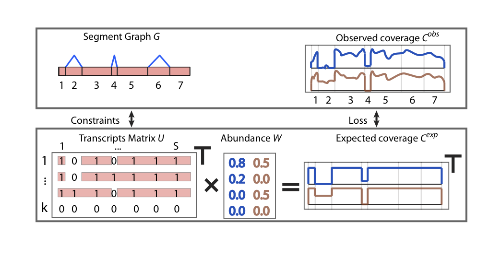 MiTie: Simultaneous RNA transcript identification and quantification (Behr et al., 2013).
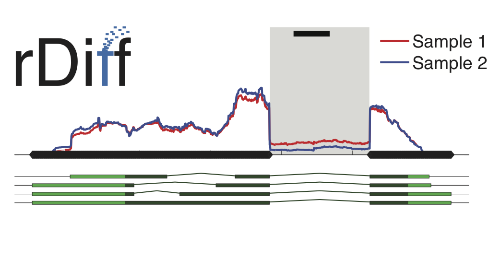 rDiff: Sensitive differential expression analysis of transcript isoforms (Drewe et al., 2013).
 Visit our online transcriptomics webserver
 Shogun 3.0 has been released on October 28th 2013
The Rätsch laboratory advances computational methods for the analysis of big data common in the biomedical sciences. The group utilizes, develops and integrates ideas from machine learning, operations research, sequence analysis, statistical genetics, text mining, and computer vision with the aim to discover relationships in biomedical data of complex phenomena.
The Rätsch laboratory has a long-standing interest in understanding and modeling all processes involved in RNA expression, regulation and processing. The group’s interests also include understanding and modeling patient data with the aim to develop intelligent clinical decision support systems.
Current Research Topics:
- Large-scale Machine Learning. The group has a long history of developing large-scale learning methods to classify sequences, predicting sequence annotations and solving large optimization problems.
- Accurate transcriptome reconstruction. The lab has developed a host of methods to accurately reconstruct, quantify and characterize transcriptomes from RNA-Seq data. In collaborations, the techniques are used to understand mechanisms of co- & post-transcriptional regulation.
- Identification of RNA-processing regulators. The lab is leading efforts to discover trans-acting factors of RNA-processing regulation via association studies. We analyze ≈4,000 cancer exomes & transcriptomes to identify factors associated with splicing and other changes.
- Clinical decision support systems. The group develops innovative methods for the analysis of electronic health records (EHR) and pathology slides. The overall aim is to build elements of decision support systems that utilizes EHR, image and genomic information to provide suggestions for treatments and to assist in the design of new trials.
News